Waste Shipment
Keeping waste battery shipments moving under the new EU rules.
Why shipments matter?
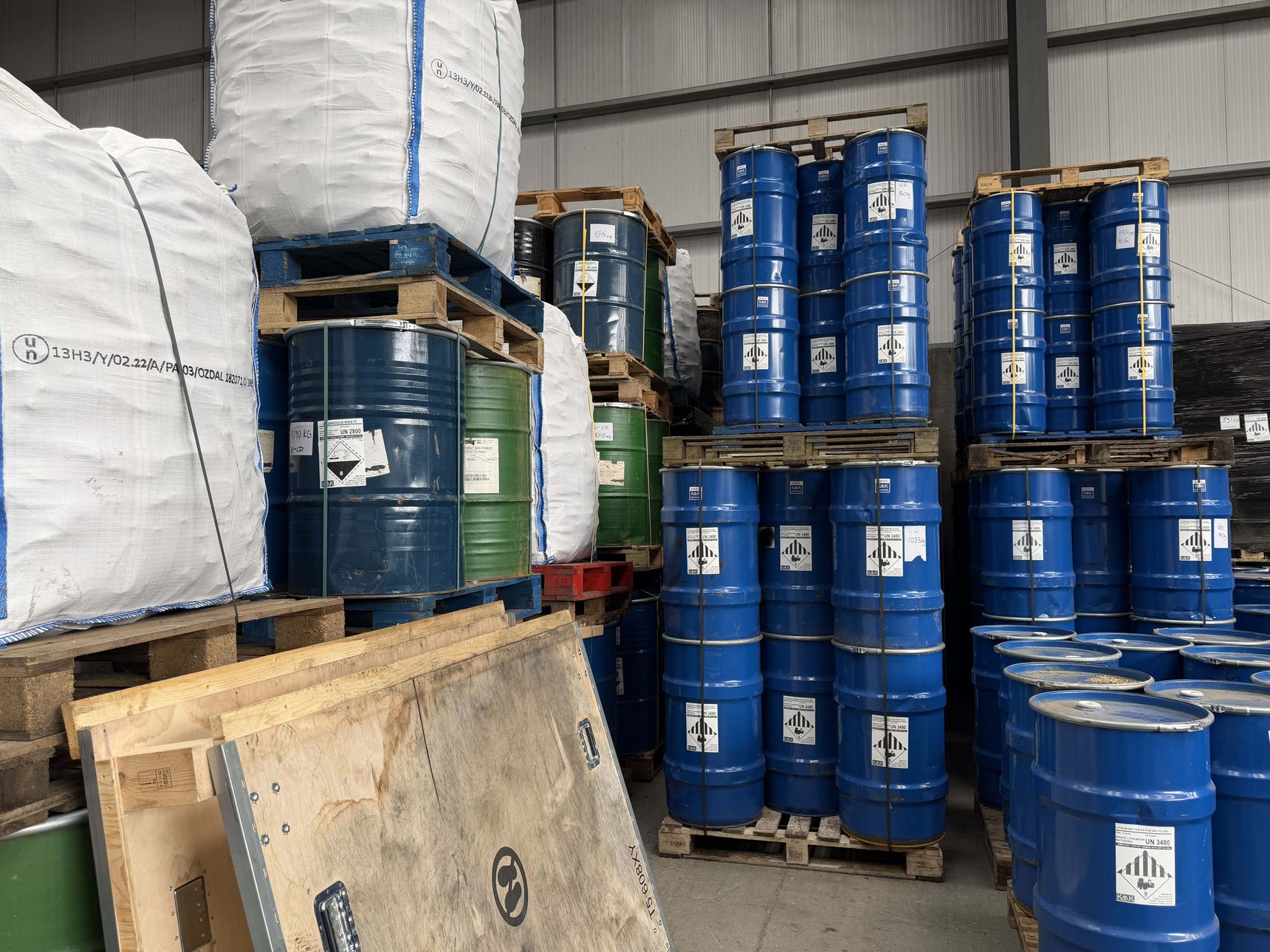
All Member States generate the full range of waste battery chemistries, while recycling capacity is concentrated in a limited number of countries. Cross-border shipments are therefore indispensable for battery collection schemes and recycling markets.
Any disruption has serious consequences: economic losses for recyclers and higher fire and safety risks when waste batteries are stored for too long.
What has changed
Regulation (EU) 2024/1157 on shipments of waste applies since 21 May 2026, replacing Regulation (EC) No 1013/2006. Two changes matter most for batteries:
DIWASS. Notifications for waste under prior notification and consent now go through the EU's Digital Waste Shipment System. There is no alternative paper or national channel.
New waste codes. The revised European List of Waste classifies black mass and lithium-based waste batteries as hazardous. Most waste battery shipments now need prior notification and consent, and exports of black mass to non-OECD countries are banned.
DIWASS: a key tool that must work everywhere
EUCOBAT strongly supports digital waste shipment procedures. DIWASS can make waste movements more transparent, traceable and efficient. To deliver, it must be:
mandatory and consistent in all Member States, without parallel national systems;
fully operational and interoperable, with trained authorities and operators;
user-friendly and proportionate, especially for high-volume operators such as collection schemes;
legally certain, with clear guidance on obligations, data requirements and checks.
EUCOBAT asks the Commission to monitor implementation and act where Member States delay or diverge.
DIWASS in the wider data landscape
DIWASS can become a data source for national battery reporting under Articles 75–76 of the Batteries Regulation. EUCOBAT encourages automated data exchange between DIWASS and national battery and WEEE reporting platforms, including for batteries in electrical and electronic equipment.
EUCOBAT also flags a gap: used equipment containing batteries, shipped as products for reuse, falls outside DIWASS. Without harmonised criteria and traceability at the product–waste boundary, Member States risk interpreting and enforcing the rules differently.
Hazardous classification: keep recycling feasible
EUCOBAT recognises the need for high environmental and safety standards. Black mass and lithium-based batteries also contain critical raw materials that are essential to Europe's recycling and strategic autonomy goals. Therefore:
shipments of waste batteries and black mass for recycling must remain feasible and efficient within the EU;
procedures should be risk-based and proportionate, without evaluation fees that make shipments uneconomic or act as hidden protectionism;
competent authorities should interpret the new classifications in a pragmatic and harmonised way.
The reclassification sharply increases the number of notified shipments, adding pressure on authorities, producers, collection schemes and recyclers alike. Where EU recycling capacity for fractions such as black mass is insufficient, access to proven, certified facilities outside the EU/OECD may be needed, under strict safeguards, the Basel Convention and authority control. EU guidance on when treated battery materials can qualify as non-hazardous waste or products would also help.
Legal certainty in the transition
Ahead of 21 May 2026, EUCOBAT called on the Commission to confirm that:
notifications started before 21 May 2026 can be completed under the old Regulation;
the new battery waste codes can be used in applications before they formally apply;
approved notifications using old codes remain valid for their full time and quantities.
EUCOBAT's Recommendations
Keep DIWASS fully operational and reliable, as there is no alternative notification channel.
Provide clear transitional arrangements, including continued validity of existing notifications and a phased introduction of new waste codes.
Monitor whether authorities in all Member States meet the statutory deadlines: 10 days to request additional information and 30 days to decide, and act where they do not.
Harmonise risk-based methods for calculating financial guarantees and evaluation fees.
Ensure coherence and interoperability between DIWASS and national battery and WEEE reporting platforms.
Read the full Eucobat Position Paper
Explore more themes.